Lyman Wight would have been 230 years old this year.
'That's fine," you say, "but who's Lyman Wight?" Briefly, Wight was born in 1796 in New York and moved west later, joining first the Re - formed Baptist Church and later the Church of Jesus Christ of Latter Day Saints the socalled "Mormons." He rose in the church to the point of being nominated to the highest circle. But Wight was known as an indepen - dent, and he differed with church leaders on some important points. He was excommunicated.
Rejected, Wight led some 150 Latter-day Saints from Wisconsin Territory to the Republic of Texas, arriving in No -
vember 1845.
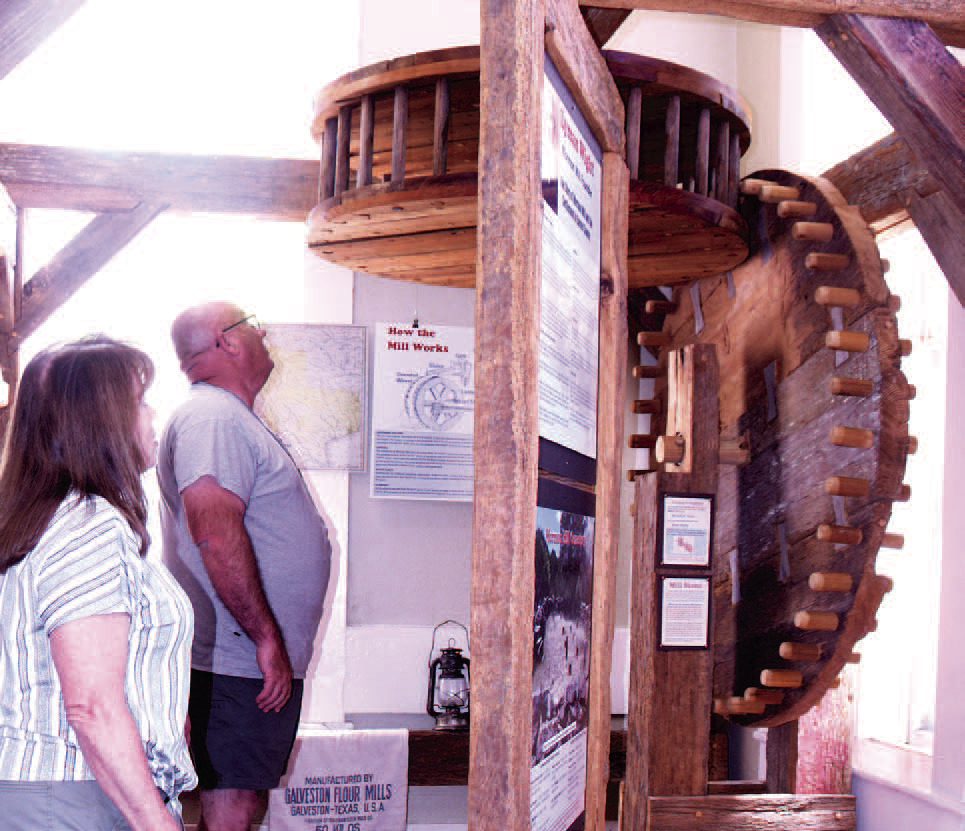
They settled in Cen - tral Texas, on a water - way known as Hamilton Creek, where they built homes and a mill.
"Aha!" you say. "A Mormon mill." Correct. Stories about the mill on Hamilton Creek differ. One version is that Wight and the Mormons were here a couple of years and then moved to the area of Kerrville, where they stayed a while and head - ed back north. Wight died on the trip north.
Another version has them living near Kerr - ville before moving to Burnet County.
But Nannie Moore Kinser, who lived in the area, wrote a memoire in 1939 and she has a differ - ent version. Mrs. Kinser says the Mormons first went to Webbers Prairie, which is southeast of Man - or, and built a mill. She said they only later moved to Hamilton Creek.
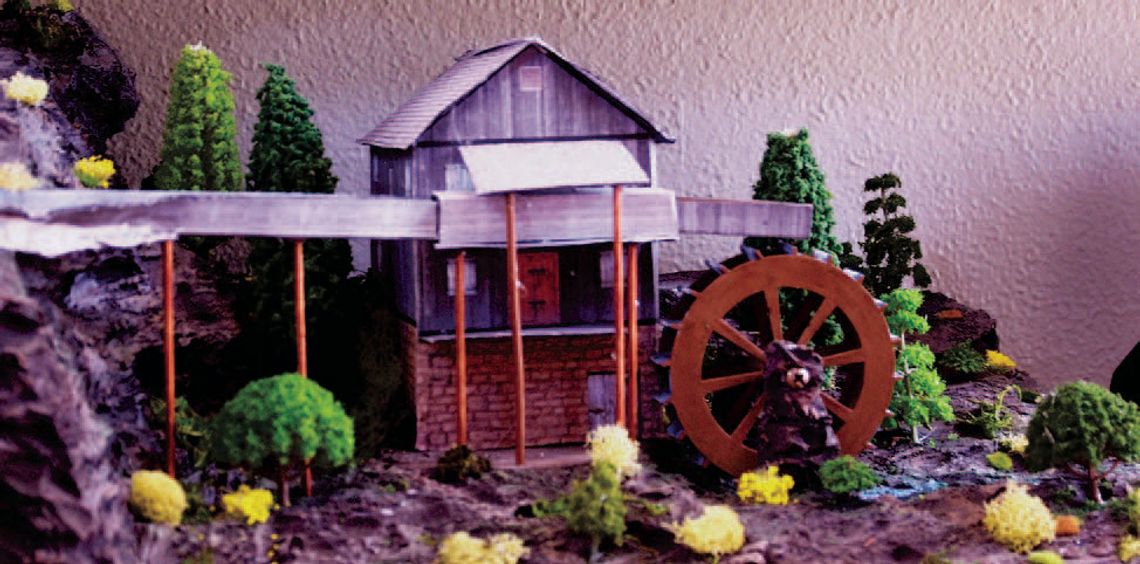
"They put up an - other mill, put in an over - shot wheel and ground corn and wheat. They did not bolt the wheat." (Bolting, or sifting, wheat removes the rough parts and allows smooth - er, better rising of dough.)
She continues: "They also had a circle saw and made shingles and lum - ber out of native cedar. They also made tables, chairs and bedsteads and the women made willow baskets. They became dis - satisfied in 1853 and they sold to Noah Smithwick." Kenneth May, writ - ing in the Deseret News in Salt Lake City, adds, "The mill was three sto - ries high and housed both a grinding mill and a saw that could handle large timbers, according to historian Melvin C. Johnson. The Wight or Mormon Mill settlement was originally known as Hamilton, but the name was later changed to Burnet. Members of the settlement built a school and participated in local politics. They did not, however, seek to hold political office." The Handbook of Texas, published by the Texas State Historical Association, adds that the site had a population of about 250 and boasted several blacksmiths and furniture craftsmen.
It differs from May, however: "The colony remained apart from the civic affairs of the coun -
ty; Wight and a board of elders were the sole gov - ernment." Despite their industry and skills, the Mormons became heavily in debt.
"Plagued by financial problems, mounting re - sentment of their uncon - ventional theology by lo -
cal citizens, and frequent Indian raids, the Mor - mons decided to move on," according to the Handbook. In Decem - ber 1853 Wight led most of the group to Bandera County. They sold the Mormon Mill property to Noah Smithwick.
Apparently the depar -
ture of Wight's followers didn't have an immedi - ate effect on the village. A post office opened in 1856 with Smithwick's partner and nephew, John R. Hubbard, as postmas -
ter. From there the mill passed into several hands but increasing numbers of millers in the area proved too much competition and the mill's business fell off. The population dwindled until the post office closed in 1875. In 1901 the mill closed down, and one year lat - er the flume and several surrounding buildings burned. Local farmers tore down the remaining mill buildings and used some of the materials for construction of a nearby barn. Finally in 1915 the remaining abandoned residences burned. The Handbook of Texas says all that's left is the Mor -
mon cemetery and a state historical marker, but nei - ther of those can be seen from the right of way.
But now you know why it's called Mormon Mill Road.