As spring fades into summer, the landscapes begin to trade bluebon- nets for sunflowers, and our skies fill with flash es of yellow. Some birds wear only a touch of sunshine in their feathers, while others seem to carry an entire field of wildflowers wherever they go. If you’ve been spending time outdoors lately, you may have noticed a few of these colorful visitors.
One of the brightest is the American Gold- finch. Males in breeding plumage are impossible to miss with their brilliant yellow bodies and black caps. Unlike many birds that nest in spring, goldfinches wait until midsummer when thistles and other seed-producing plants are abundant. Their nests are lined with soft plant fibers, and their diet consists almost entirely of seeds. Watching a flock bounce through the air in their distinc- tive wave-like flight is one of summer’s simple pleasures.
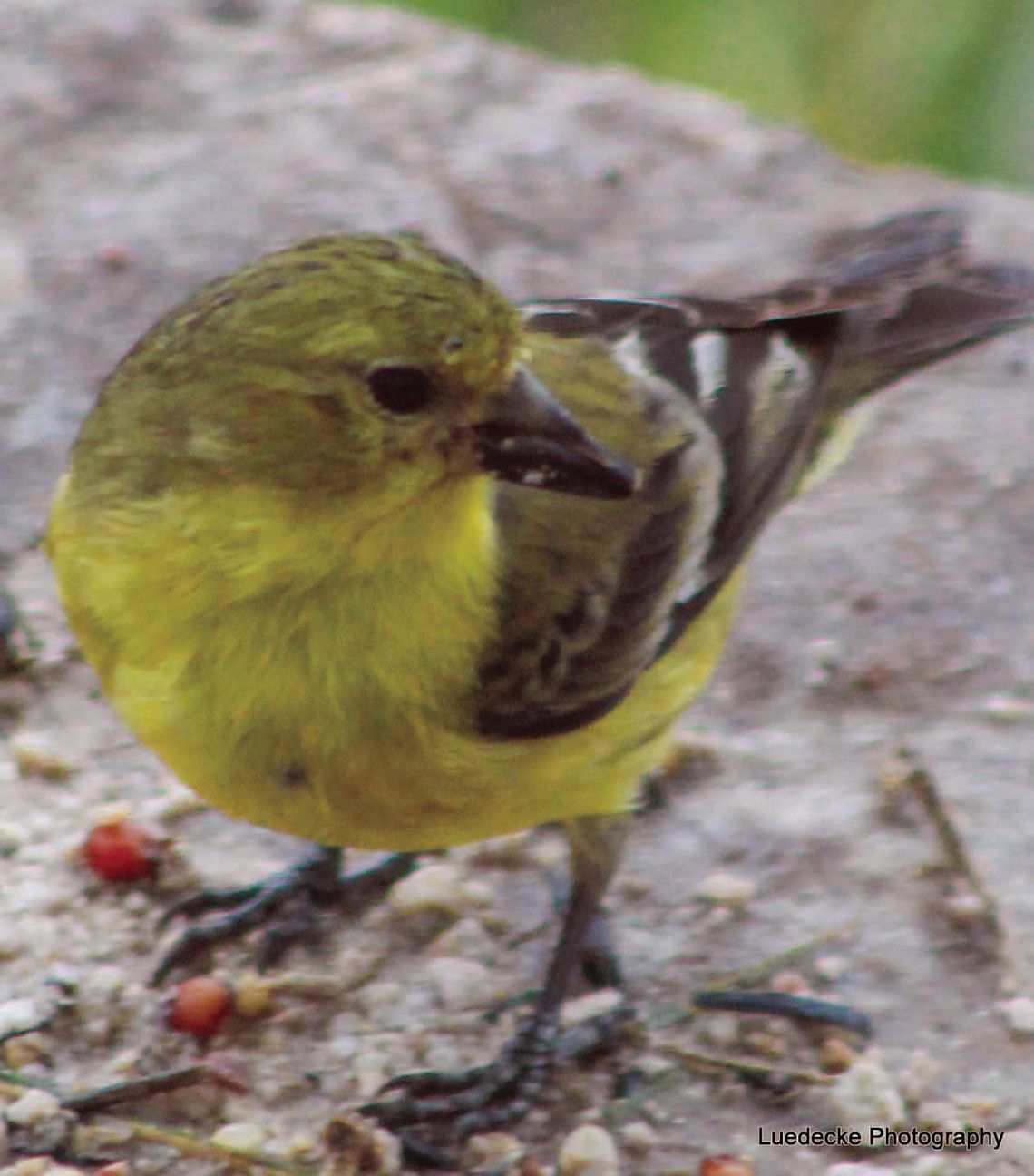
Their cousin, the Lesser Goldfinch, is becoming increasingly common across Central Texas. Slightly smaller than the American Goldfinch, males have bright yellow undersides and a dark back. They are energetic little birds that often gather around feeders filled with sun - flower or nyjer seed.
One fun fact is that Less- er Goldfinches can nest several times in a single season if conditions are favorable, helping them quickly expand their populations.
While not completely yellow, the Painted Bunting deserves a place in any discussion of colorful birds. Often called the most beautiful bird in North America, the male looks as though he was painted by an artist using every color available. His bright yellow-green back contrasts with a blue head and red breast. Females and young birds wear softer shades of green and yellow that provide excellent camouflage.
Painted Buntings return to our area each spring, and many local residents eagerly await their arrival. Despite their vivid colors, they can be surprisingly difficult to spot as they often remain hidden in thick brush.
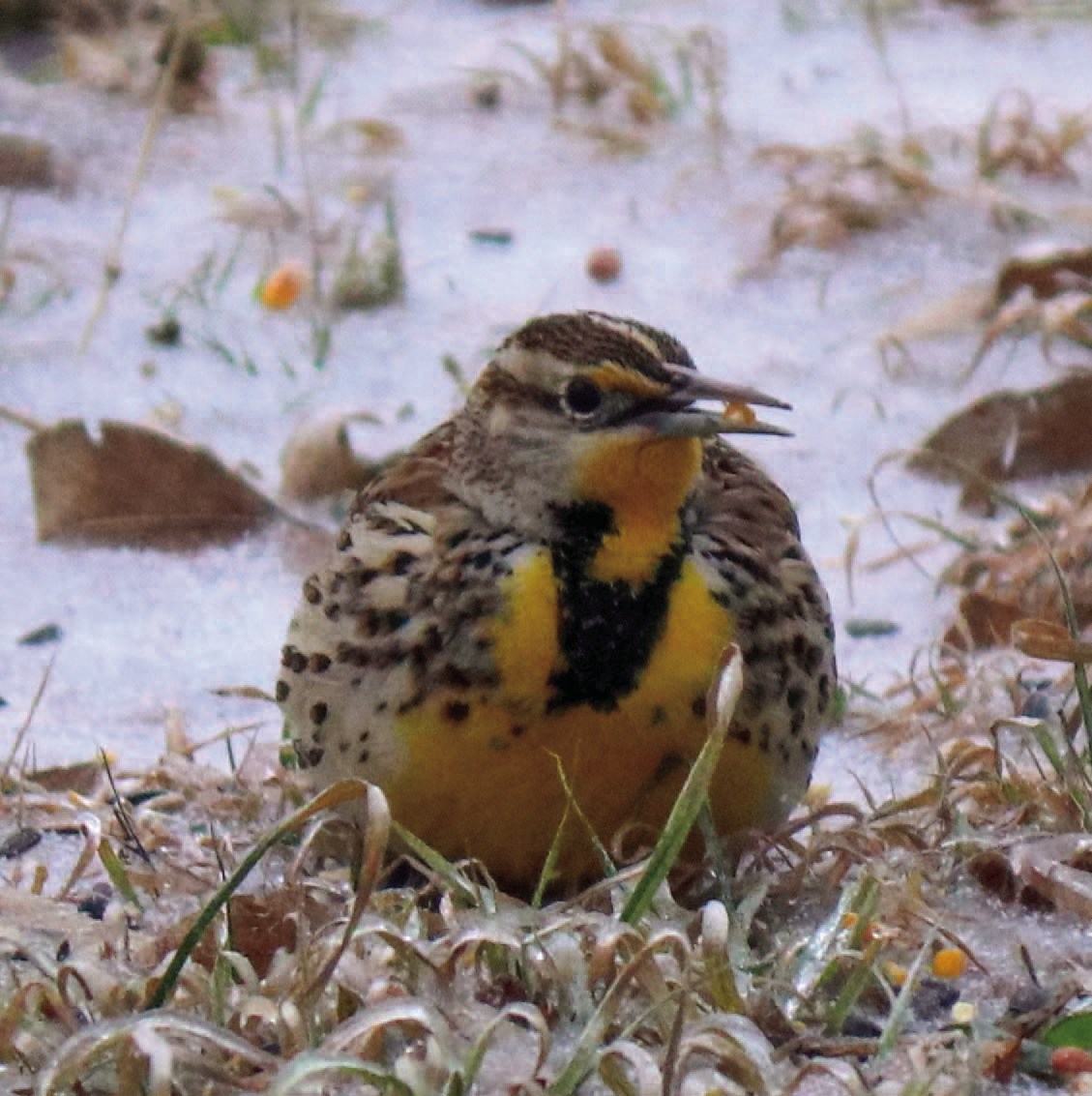
If you’ve ever heard a clear, flute-like song drifting across a pasture, you may have been listening to a Western Meadowlark. These birds wear bright yellow breasts marked with a distinctive black “V.” Although they spend much of their time on the ground, their songs carry great distances across open grasslands.
Early settlers often considered the meadowlark’s song one of the most beautiful sounds on the prairie. Interestingly, meadowlarks can sing dozens of different song variations, creating a repertoire far larger than many other bird species.
During migration, another yellow visitor occasionally passes through Burnet Coun- ty: the Northern Yellow Warbler. This small songbird glows with golden-yellow feathers and, in males, faint reddish streaks across the chest. Yellow Warblers are long-distance travelers, wintering far to the south before returning north to breed. Despite weighing less than half an ounce, they navigate thousands of miles during migration. Their sweet song often reveals their presence before their tiny bodies can be seen among the leaves.
Whether perched on a fence post, hidden in a cedar thicket, or passing through during migration, these yellow-feathered birds remind us that nature always finds ways to brighten our days. The next time you’re outdoors, keep an eye out for a flash of gold among the trees. It might just be one of Burnet County’s most colorful neighbors.